The Elements of Design: How Texture Brings Gardens & Arrangements to Life
In our previous article we explored an important element of design: color. Today we’re exploring texture, another crucial aspect of design.
When people think about designing a beautiful garden or creating a floral arrangement, color is usually the first thing that comes to mind. But after color draws us in, it’s texture that keeps us engaged.
Texture is what gives a design richness, depth, and personality. It’s the softness of a feathery grass swaying in the breeze, the velvety petals of a garden rose, or the glossy leaves that make the surrounding blooms appear even more vibrant.
Whether you’re planting a garden or arranging flowers in a vase, texture transforms a collection of plants into a composition that feels layered and alive.
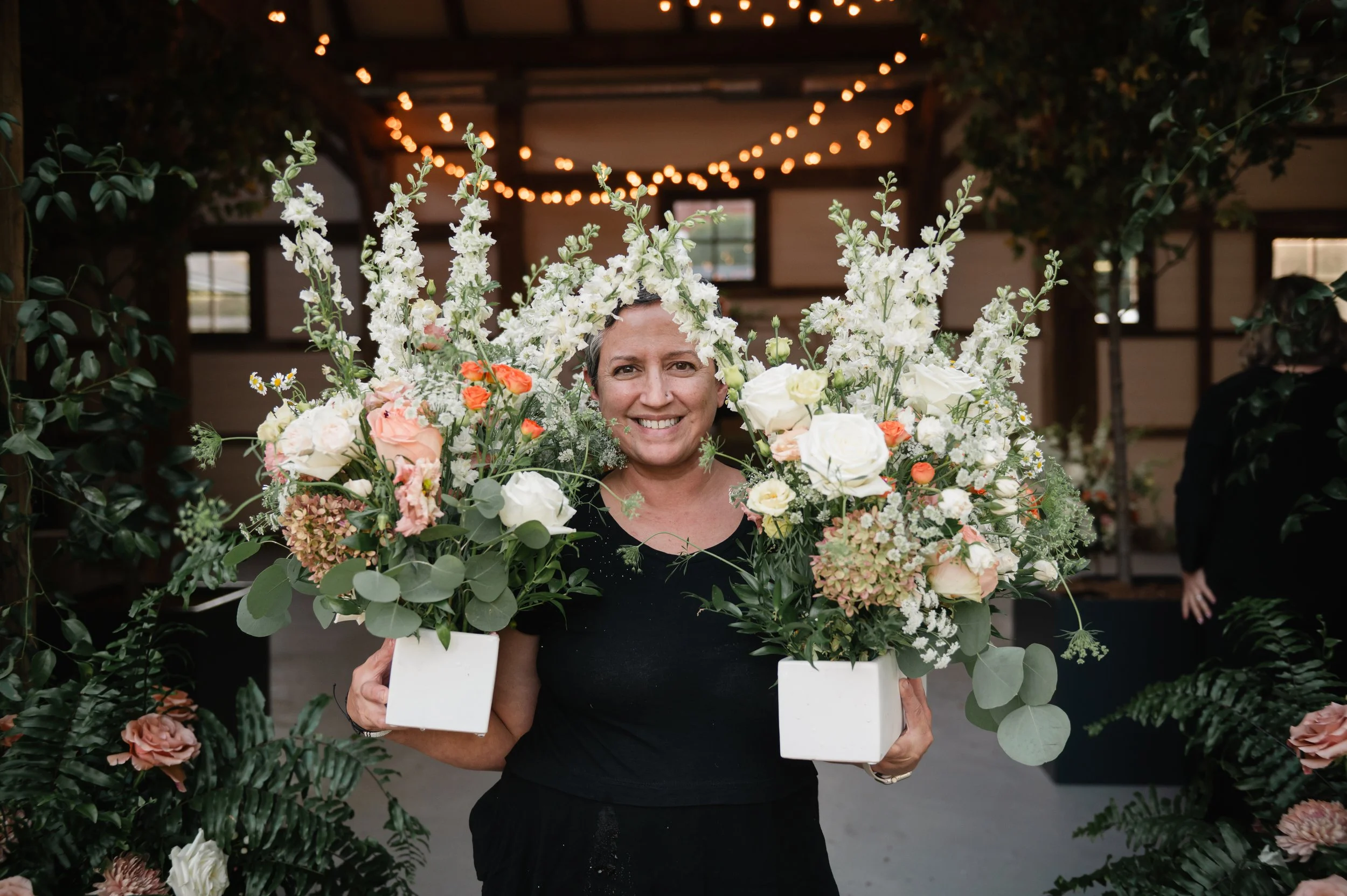
What is Texture?
In design, texture refers to the visual and tactile qualities of a plant or flower. How it looks, feels, and interacts with everything around it are all a part of a garden’s texture.
Some textures are coarse and bold, others are delicate and airy. Mixing these qualities creates contrast, balance, and visual interest.
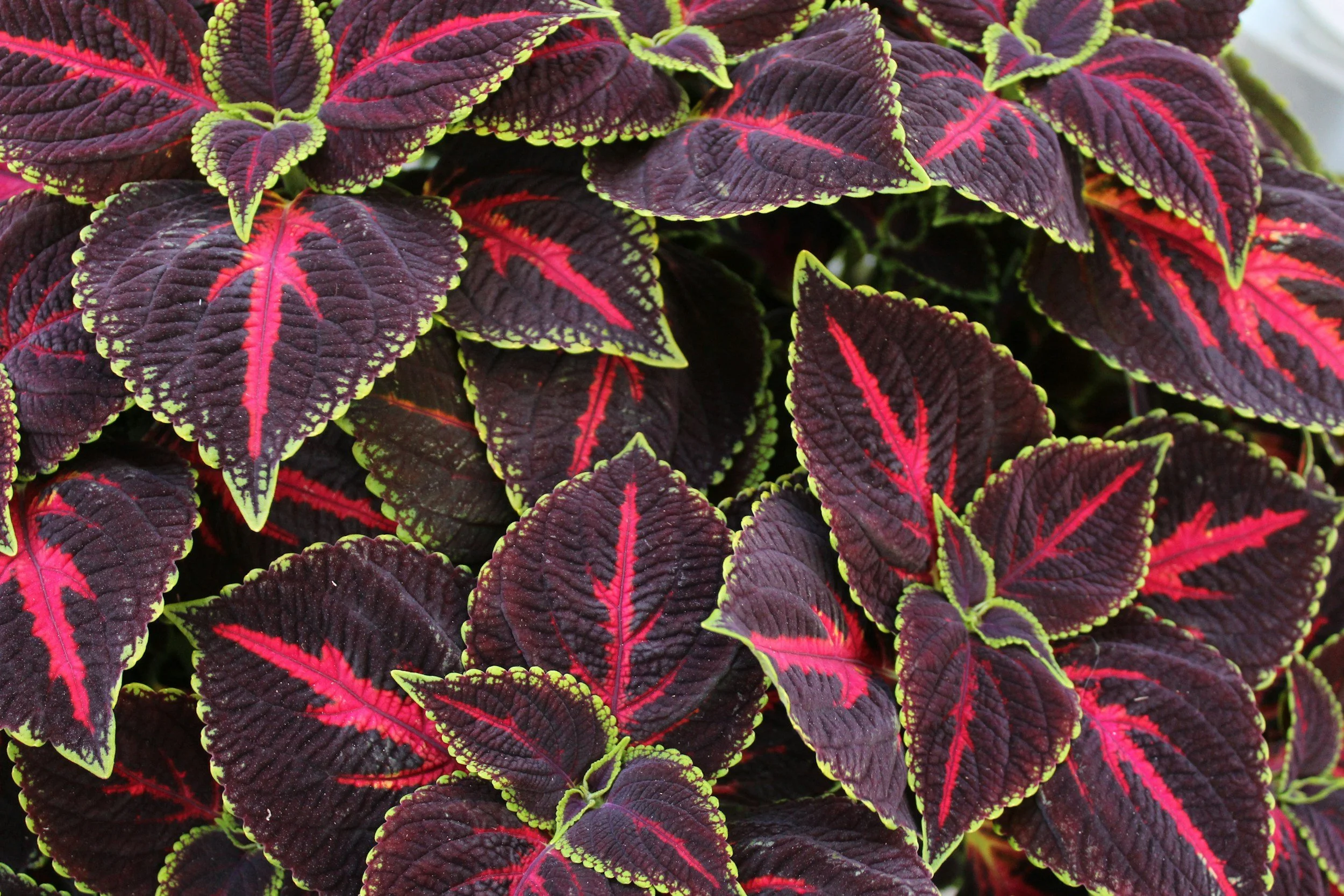
Coleus
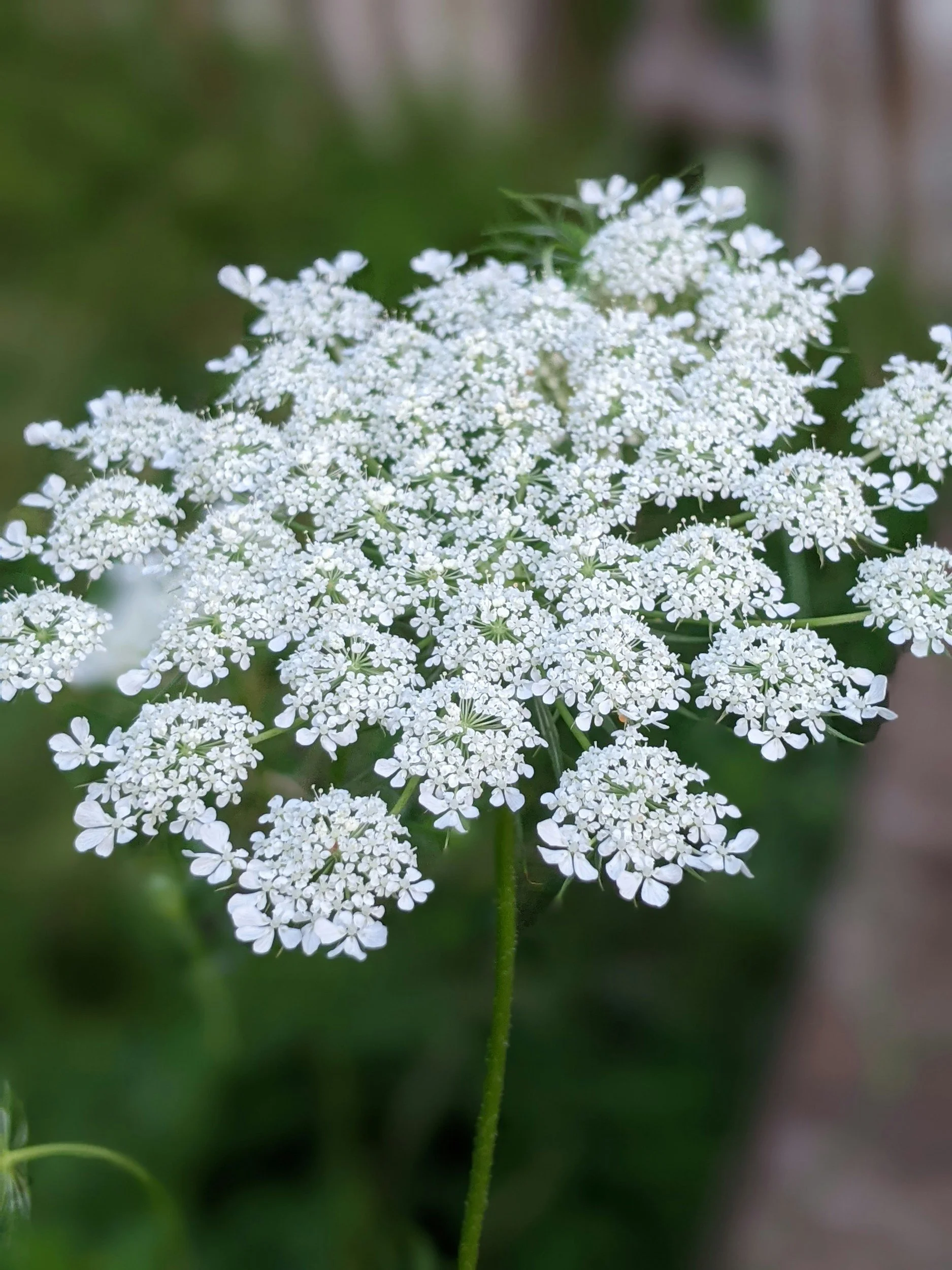
Queen Anne’s lace
Texture isn’t only about how a plant feels, but also how it appears. A smooth leaf with pronounced veining creates visual texture by introducing pattern. Think beyond the blooms themselves. Texture comes from every part of the plant:
Flowers
Foliage
Seed pods
Grasses
Branches
Berry clusters
Bark
Even the surrounding hardscape in a garden
Why Texture is Important
Imagine a border filled entirely with medium-sized, rounded flowers and broad green leaves. Even if every plant blooms beautifully, the overall effect can feel flat because everything has a similar visual weight.
Now imagine introducing a few contrasting textures:
Wispy ornamental grasses weaving through the planting
Upright flower spikes such as salvia or veronica
Airy clouds of Ammi or fennel
Large, bold hosta leaves beneath delicate ferns
The burgundy foliage of ninebark against the silvery leaves of artemisia
Suddenly, the garden has rhythm. (We’ll dive deeper into this in future articles about the elements of design. Make sure you’re on our mailing list to hear about it.) Your eye moves naturally through the space, discovering new details with every step.
Texture also gives a garden year-round interest. Long after the flowers are gone, grasses, seed heads, berries, evergreen foliage, and even the peeling bark of shrubs continue to provide beauty through autumn and winter.

Texture Creates Movement
Fine grasses ripple with the slightest breeze, cosmos sway gracefully, Queen Anne’s Lace appears to float above neighboring plants. Movement brings a garden to life. Rather than feeling rigid or overly planned, the garden becomes lively and ever-changing.
As designers, we can use these plants intentionally to soften stronger architectural forms and create a more interesting garden.
Texture in Floral Design
The same principles apply when we move from the garden to the vase. A common mistake in floral design is relying too heavily on focal flowers while overlooking the supporting textures that give an arrangement dimension.
Beautiful bouquets are layered compositions, not just collections of flowers. Learn more in this blog post about using the golden ratio of design in your arrangements.
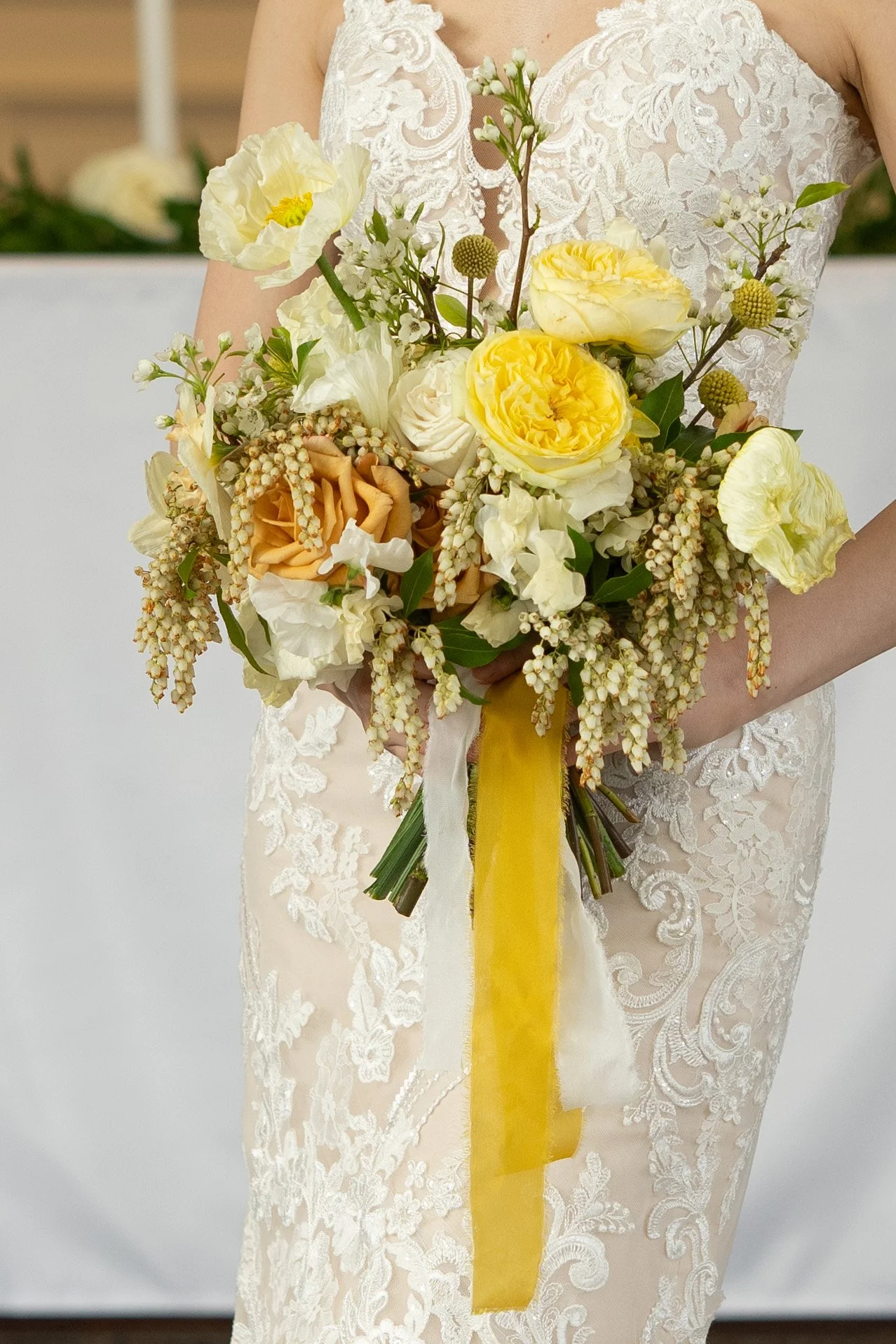
When I design, I often think of texture as serving several important roles.
Filling
Fine-textured flowers help fill visual gaps while allowing the eye to travel comfortably through the arrangement.
Flowers such as feverfew, Queen Anne’s lace, yarrow, astrantia, or waxflower create softness without adding heaviness.
Rather than distract from the focal blooms, they connect everything together.
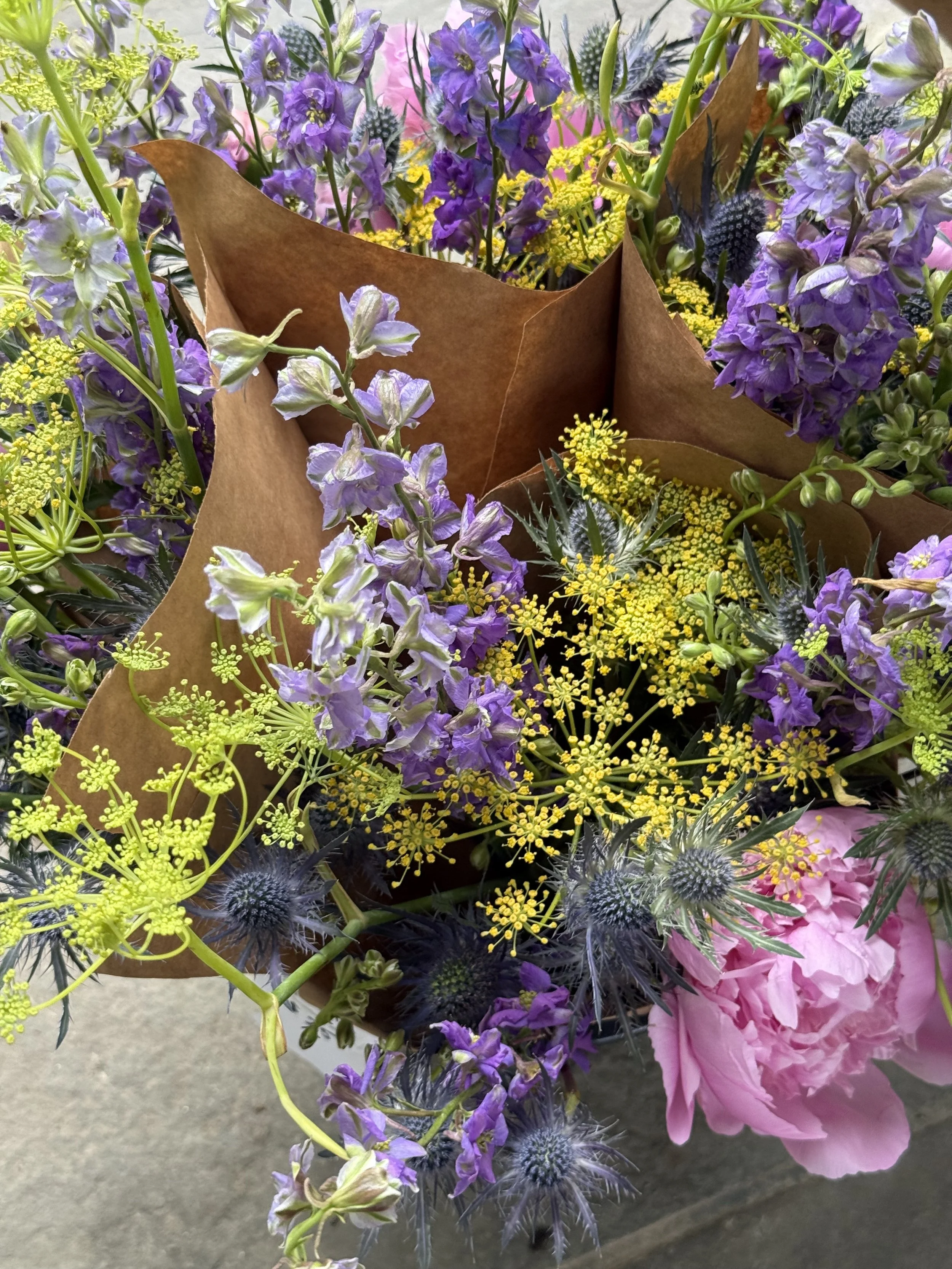
Filling
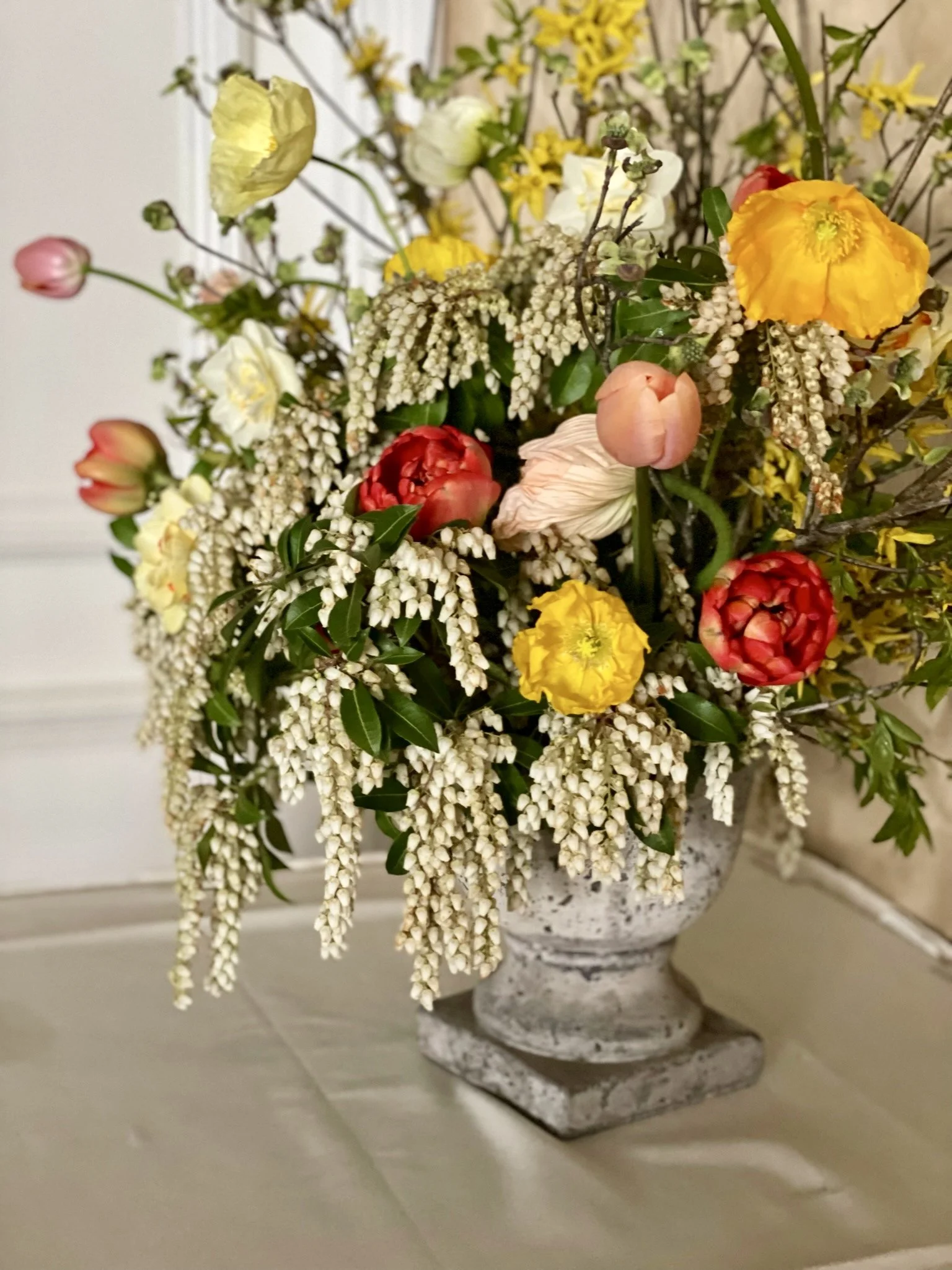
Draping
Draping
Some flowers and foliage naturally spill over the edge of the vessel, softening hard lines and creating a graceful transition between the arrangement and its container.
Trailing jasmine vine, ivy, raspberry canes, honeysuckle vine, blooming adromeda, and other flexible stems introduce movement and help the arrangement feel less confined.
These cascading elements often make an arrangement feel more organic and garden-inspired.
Creating Movement
Not every stem should stand perfectly upright. Light, airy materials extending beyond the main body of the arrangement encourage the viewer’s eye to move through the design.
Delicate grasses, branching foliage, airy umbels, and wispy tendrils create a sense of motion, even when the arrangement is sitting still.
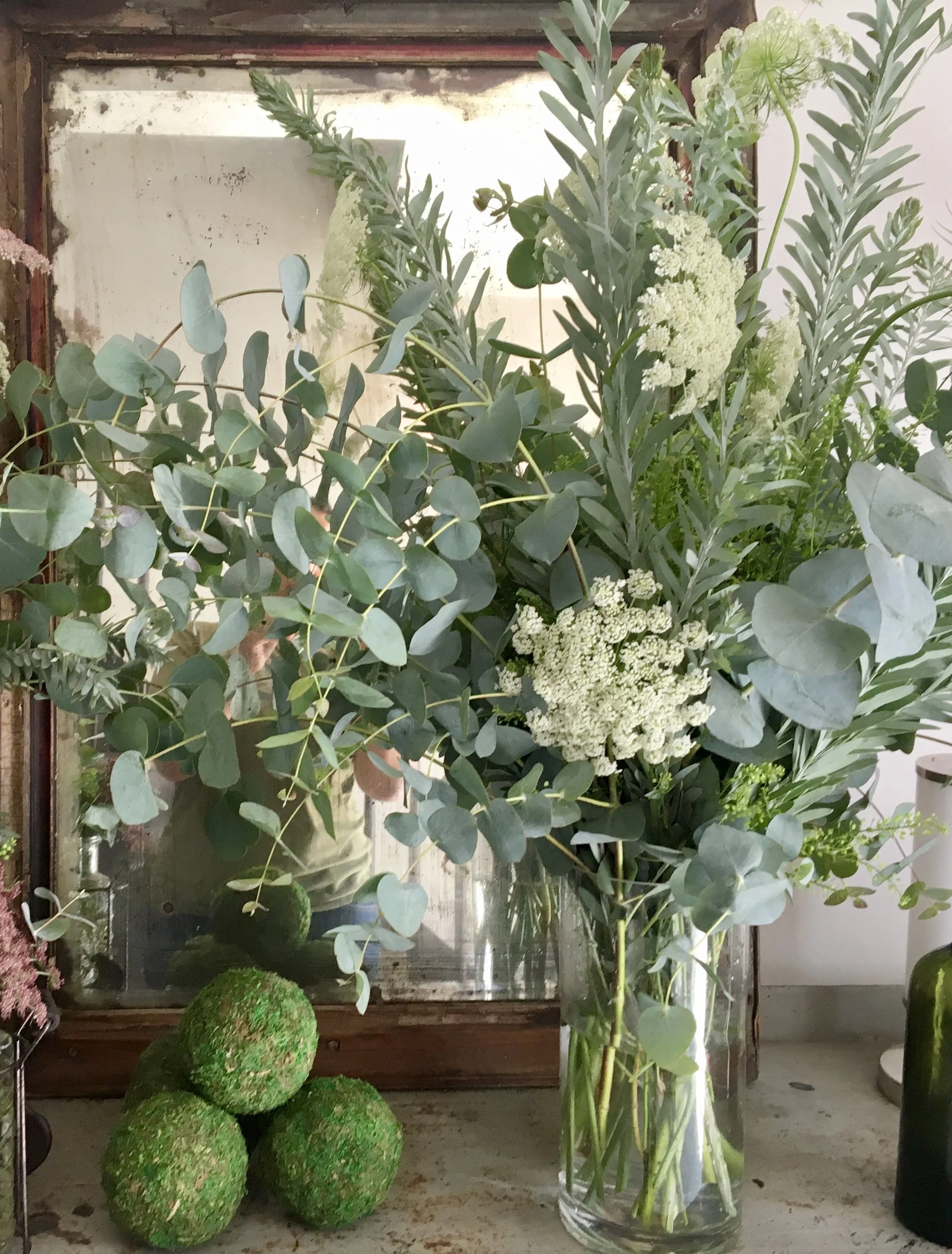
Creating Movement
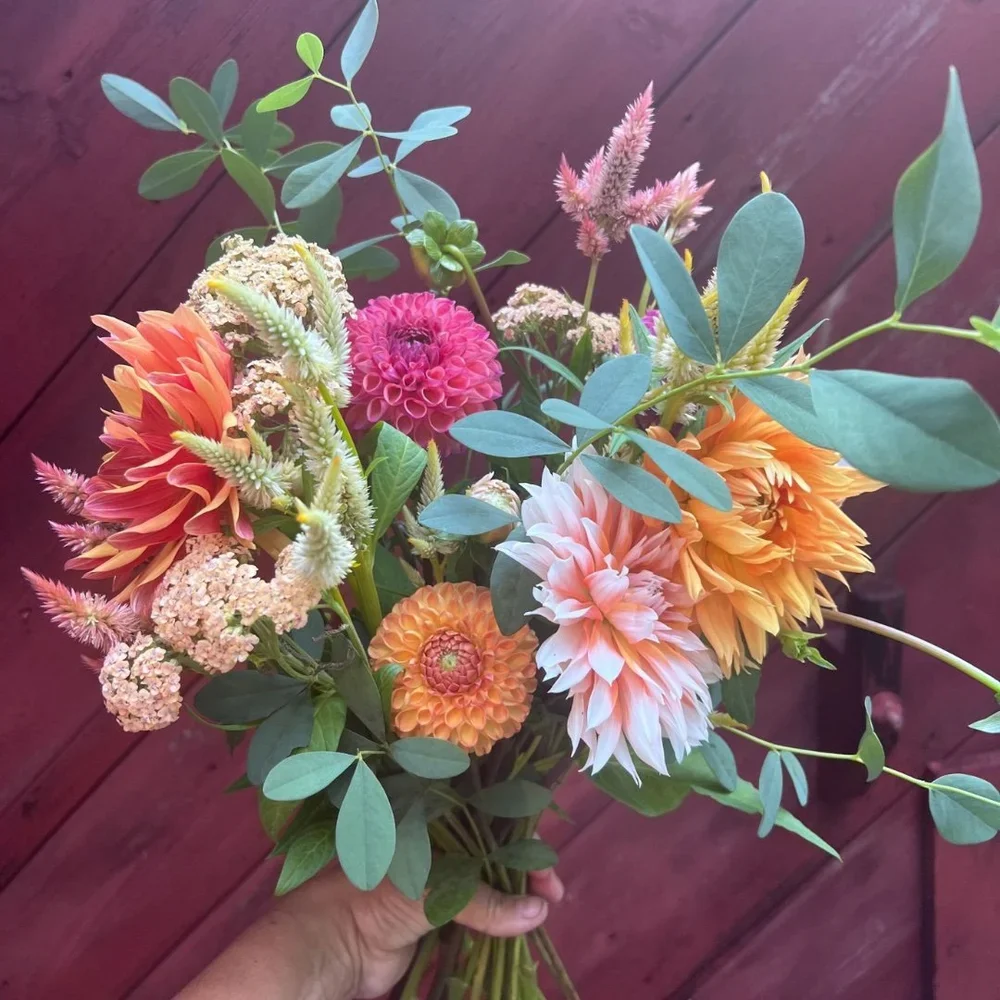
Adding Depth
Adding Depth
Texture also creates visual layers. Imagine placing smooth lisianthus beside fuzzy celosia, airy Ammi, glossy camellia foliage, rough seed pods, and feathery grasses. Each material catches light differently and occupies its own visual space.
These subtle differences create depth, making the arrangement feel fuller and more interesting without requiring additional flowers.
Every Stem Has Something to Contribute
Leaves, vines, grasses, pods, berries, branches, and beautifully patterned foliage are not only filler. They’re essential design elements.
Some of my favorite materials aren’t flowers at all.
Fresh herbs add fragrance and softness
Seed pods provide structure
Curly tendrils introduce whimsy
Berry branches offer seasonal interest
Twigs create line and movement
Richly veined leaves add subtle complexity rewards a closer look
It’s often these supporting materials that make an arrangement memorable.
Growing for Texture
As flower growers, we have the unique opportunity to plan for texture long before harvest.
When selecting plants for a cutting garden, don’t focus only on flowers. Include plants that offer a diversity of texture throughout the seaosn.
Grow airy fillers alongside bold focal flowers
Plant ornamental grasses, interesting foliage, herbs, vines, and seed-producing annuals
Incorporate plants with distinctive leaf shapes and colorful or variegated foliage
Leave room for plants that may never become the star of the bouquet but consistently elevate every arrangement they touch.
By growing with texture in mind, you’ll not only create a more beautiful garden, you’ll also expand your creative possibilities as a floral designer.
What kind of flower gardener are you? Take our free quiz to find out.